Types of Car Radiator Fluid and Their Functions: Don’t Choose the Wrong One!
Published at • Kendaraan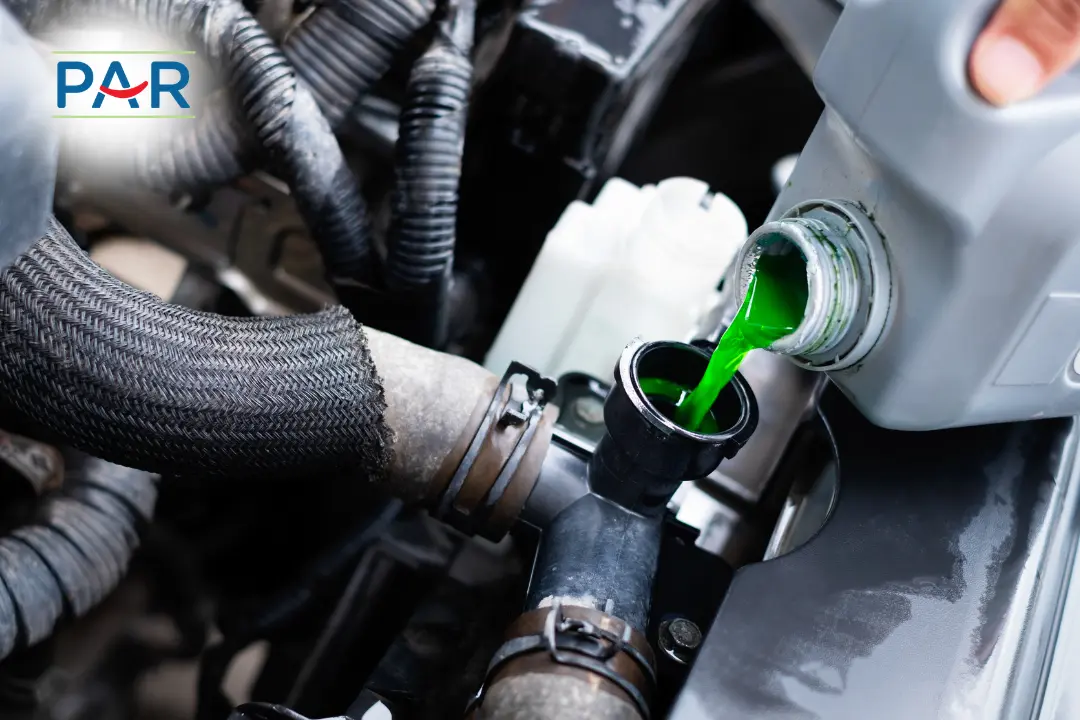
Car radiator fluid is often considered an ordinary liquid whose sole purpose is to “fill” the radiator. In reality, it plays a critical role in maintaining stable engine temperatures, especially during long-distance travel, heavy traffic conditions, or daily operational use with extended driving hours. Choosing the wrong radiator fluid can prevent the cooling system from functioning optimally and may lead to overheating, corrosion, scale buildup, and even engine component damage.
Many vehicle owners also assume that all radiator fluids are the same, as long as the liquid appears bright in color or the reservoir remains full. In fact, automotive coolants are formulated using different technologies. Some use Inorganic Additive Technology (IAT), others Organic Acid Technology (OAT), and Hybrid Organic Acid Technology (HOAT). In addition, coolant colors such as green, red, blue, pink, yellow, and orange often lead people to believe that certain colors are inherently better. However, color alone is not a reliable indicator of quality or compatibility with a vehicle's engine.
For this reason, understanding the different types of radiator fluid, coolant functions, and how to choose the right coolant is essential. This article explains the differences between radiator fluid, coolant, and regular water, coolant technologies, coolant colors, the risks of using mineral water, and when radiator fluid should be replaced.
Radiator fluid helps maintain the engine's operating temperature within an optimal range. When the engine is running, combustion generates significant heat. Without proper temperature control, the engine can overheat and internal components may become damaged.
Within the cooling system, radiator fluid circulates from the radiator to the engine, absorbing heat along the way. The heated fluid then returns to the radiator, where airflow and the radiator fan dissipate the heat. This cycle continuously repeats while the engine operates.
In general, radiator coolant serves several important functions:
Coolant absorbs heat from the engine and transfers it to the radiator, where the heat can be released into the surrounding air. This process is essential for maintaining stable vehicle performance.
If the coolant is unsuitable or its level drops significantly, engine temperatures can rise rapidly. This may trigger the temperature warning light, reduce engine performance, or even cause unexpected engine shutdowns.
High-quality coolants contain additives designed to protect metal components within the cooling system from rust, corrosion, and deposits. This is one of the key differences between coolant and ordinary water.
Engines operating within their ideal temperature range tend to perform more efficiently. Excessive heat can reduce performance and negatively impact fuel economy.
Many people refer to all liquid inside the radiator as "radiator water." However, there are significant differences between radiator fluid, coolant, and ordinary mineral water.
The term radiator fluid is commonly used to describe any liquid found inside a radiator. Technically, however, the ideal radiator fluid is coolant—a specially formulated fluid designed for automotive cooling systems.
Automotive coolant is a specially engineered cooling fluid consisting of treated water, glycol, and anti-corrosion additives. In addition to reducing engine temperatures, coolant helps maintain the condition of the radiator, water pump, thermostat, and other cooling system components.
Mineral water is not recommended for long-term radiator use. The minerals it contains can cause scale buildup, deposits, and corrosion within cooling passages. Over time, these deposits may restrict coolant flow and force the cooling system to work harder. Unlike coolant, ordinary water does not contain additives that prevent rust and scale formation.
Besides color, automotive coolants are also categorized according to their additive technology. The three most common types are IAT, OAT, and HOAT.
IAT is an older coolant technology commonly used in older-generation vehicles. It contains inorganic additives such as silicates and phosphates to help prevent corrosion.
Its main advantage is rapid corrosion protection for metal components. However, its service life is generally shorter than modern coolant technologies, requiring more frequent coolant replacement.
OAT coolant uses organic acid-based additives and is widely used in modern vehicles. It offers a longer service life and extended corrosion protection.
Unlike conventional coolants that coat all metal surfaces, OAT protects only areas susceptible to corrosion. However, OAT is not suitable for every vehicle, so manufacturer recommendations should always be followed.
HOAT combines elements of both IAT and OAT technologies. It is designed to deliver strong corrosion protection while maintaining an extended service life.
Because coolant formulations vary, mixing different coolant technologies without verifying compatibility can reduce cooling system protection and overall performance.
Coolant colors are often misunderstood. Green, red, blue, pink, yellow, orange, and purple coolants are all available in the market. Many drivers assume that certain colors indicate superior quality or higher value. In reality, color alone does not determine coolant quality.
Some manufacturers use colors to distinguish formulas or technologies. For example, green coolant is often associated with IAT, while red, pink, or orange coolants are frequently linked to OAT or long-life formulations. However, color standards vary between manufacturers.
This means two coolants with the same color may have completely different formulations, while coolants with different colors may still be compatible if their specifications match. Therefore, coolant selection should never be based solely on color.
Mixing coolants based only on color is not recommended. If the underlying technologies differ, the mixture may reduce additive effectiveness, create deposits, and compromise corrosion protection.
If the coolant appears cloudy or has already been mixed with an unknown formulation, flushing and inspecting the cooling system is generally the safest approach.
Using ordinary water may seem practical, especially during emergencies. However, long-term use can create several issues.
Mineral water contains dissolved minerals that can leave deposits inside the cooling system. Over time, these deposits accumulate and restrict coolant flow.
Unlike coolant, ordinary water contains no anti-corrosion additives, making cooling system components more vulnerable to rust and corrosion.
When coolant circulation is disrupted by scale or corrosion, engine heat cannot be dissipated efficiently, causing temperatures to rise more quickly.
Components such as the radiator, water pump, thermostat, radiator hoses, and radiator cap can suffer accelerated wear when improper coolant is used.
Ordinary water should only be considered a temporary emergency solution. The cooling system should be restored with the correct coolant as soon as possible.
The owner's manual typically specifies the recommended coolant type, technical specifications, and replacement intervals.
Determine whether the vehicle requires IAT, OAT, HOAT, or another specific coolant formulation.
Premixed coolant is ready to use, while concentrated coolant must be diluted with distilled or demineralized water according to the manufacturer's instructions.
If the existing coolant type is unknown, performing a complete system flush before changing coolant is generally recommended.
Vehicles frequently used for commercial operations, long-distance travel, or heavy traffic conditions require a cooling system that remains in optimal condition at all times.
Coolant replacement intervals vary depending on coolant type, vehicle model, vehicle age, and operating conditions. Some coolants require more frequent replacement, while others offer extended service life.
Silicate-based coolants generally require earlier replacement, whereas extended-life coolants can remain effective for longer periods. However, the manufacturer's maintenance schedule should always serve as the primary reference.
For commercial fleets, coolant inspections should not rely solely on mileage. Regular maintenance schedules should also include inspections of radiator condition, coolant level, hoses, radiator caps, and cooling fans.
Vehicle owners should also watch for warning signs indicating coolant problems:
To keep the cooling system functioning properly:
For fleet vehicles, these maintenance practices should be integrated into fleet management standards to reduce the risk of operational disruptions caused by preventable mechanical failures.
Radiator fluid is far more than a supplementary liquid—it is a critical component of the engine cooling system. Automotive coolant helps maintain stable engine temperatures, prevent overheating, protect components from corrosion, and support reliable vehicle performance.
Understanding coolant technologies such as IAT, OAT, and HOAT is essential for selecting the right product. While coolant color can provide an initial reference, it should never be the sole basis for selection. The best approach is always to follow manufacturer recommendations, consider vehicle operating conditions, and maintain a regular service schedule.
For businesses that rely on vehicles for daily operations, cooling system maintenance should be performed consistently. Through Prima Auto Care & Sales and Prima Fleet Services, Prima Armada Raya provides vehicle maintenance solutions, genuine spare parts, periodic servicing, and after-sales support to ensure uninterrupted business mobility.