Following the right tips for buying a used car can help you avoid costly mistakes after the purchase. Many buyers assume that a used car with a clean exterior is automatically worth buying. In reality, appearance is only a small part of the evaluation process. There are many critical components that should be inspected, including the engine, suspension, tires, brakes, electrical system, odometer, and vehicle documents.
Buying a used car can be a more affordable option than purchasing a brand-new vehicle. However, the lower price should always be balanced with a thorough inspection. Choosing the wrong used car can lead to significant repair costs, especially when hidden issues only become apparent after several weeks of ownership.
For this reason, a used car inspection should never be rushed. Prospective buyers need to understand which components require close attention, recognize signs of potential damage, and evaluate whether the asking price is reasonable. This guide explains how to choose a used car more safely, whether for personal transportation or business operations.
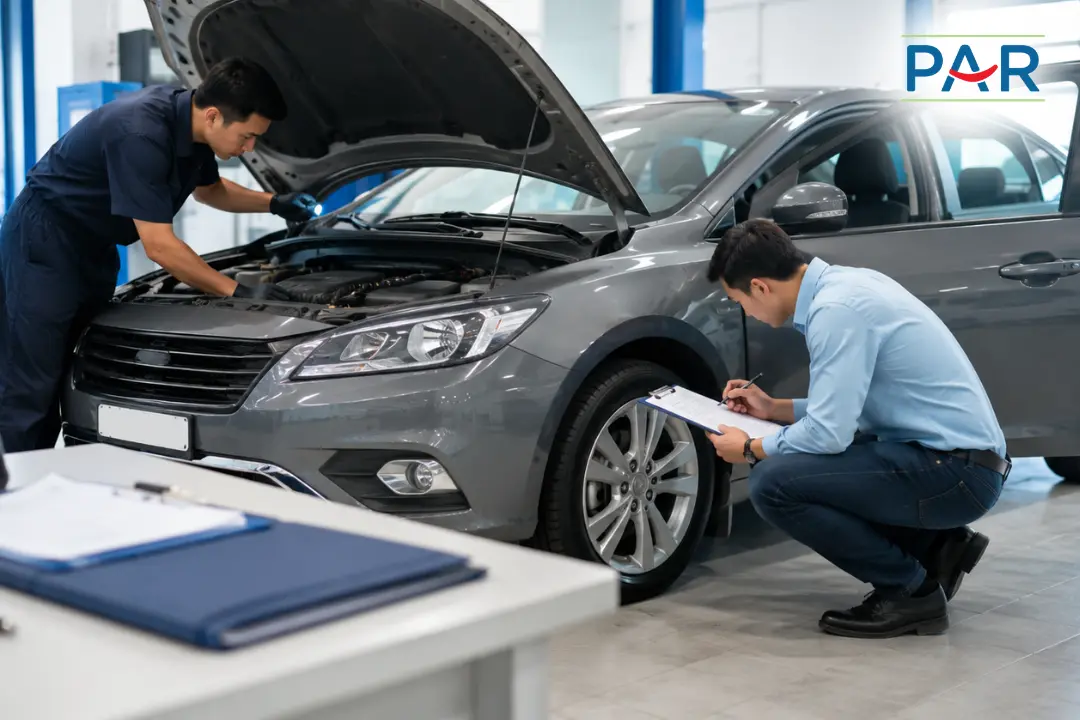
Every used car has a unique ownership and maintenance history. Some vehicles have been serviced regularly, driven responsibly, and come with complete maintenance records. Others may have been involved in accidents, neglected during routine servicing, affected by flooding, or undergone major repairs that are not fully disclosed by the seller.
This is why a thorough inspection before buying a used car is essential. A detailed assessment not only helps verify the vehicle’s condition but also serves as a basis for evaluating its value. If components require immediate replacement, you can factor those costs into your purchasing decision.
An inspection also reduces the risk of buying a vehicle with documentation issues. Problems such as mismatched chassis numbers, unpaid taxes, unclear ownership status, or discrepancies between the physical vehicle and official records can create complications later.
Buying a used car is not simply about finding the lowest price—it is about ensuring the vehicle is safe, legal, and suitable for long-term use.
The engine is the most important component affecting performance and maintenance costs.
When inspecting the engine, do not rely solely on how smooth it sounds while idling. Check the engine oil, engine bay condition, exhaust smoke, vibrations, and throttle response.
Start by looking for oil leaks around the engine. Leaks may originate from worn gaskets, seals, or other aging components. Although minor leaks may seem insignificant, they can indicate neglected maintenance.
Next, inspect the engine oil. Oil that appears excessively dark, sludgy, or unusually low may suggest poor maintenance practices.
Pay attention to exhaust smoke as well. Thick white smoke that continues after startup may indicate combustion issues or coolant leaks. Bluish smoke can suggest that engine oil is being burned.
During a test drive, evaluate engine responsiveness. Hesitation, sluggish acceleration, or unusual noises at certain RPM ranges may indicate problems with the fuel system, ignition system, or internal engine components.
For buyers without technical expertise, bringing an independent mechanic is often a wise decision.
Service records are among the most valuable indicators of a used car’s condition.
A complete maintenance history allows you to verify oil changes, major repairs, and whether routine servicing was performed according to schedule.
Request the service book, workshop invoices, or maintenance records from the seller. Vehicles serviced regularly at authorized dealerships or reputable workshops generally provide greater confidence regarding their condition.
However, service records should not be treated as an absolute guarantee. Some repairs may have been performed without documentation.
For this reason, service history should always be combined with a physical inspection. For example, if the odometer shows low mileage but the pedals, steering wheel, seats, and engine appear heavily worn, further investigation is warranted.
Service records can also help predict future maintenance expenses, including tire replacement, transmission fluid changes, and brake servicing.
The suspension and steering system directly affect comfort, stability, and safety.
These components are often overlooked because wear is not always visible from the outside. However, suspension repairs can become costly if multiple parts require replacement.
Listen for knocking or clunking sounds when driving over uneven surfaces. Loose steering, excessive body roll, or instability may indicate worn shock absorbers, bushings, ball joints, tie rods, or stabilizer links.
Check whether the vehicle sits level when parked on a flat surface. A noticeable lean on one side may suggest suspension issues.
Uneven tire wear can also indicate alignment problems or worn suspension components.
During the test drive, carefully observe whether the vehicle pulls to one side while driving straight. This may point to alignment issues, tire pressure differences, or suspension problems.
Tires and brakes are critical safety components that should never be overlooked.
For the tires, inspect tread depth, sidewall condition, and tire age. Worn tread reduces traction, especially on wet roads. Sidewall cracks may indicate aging rubber that has become brittle.
Check the tire manufacturing date code as well. Even tires with adequate tread depth may require replacement if they are too old.
Pay attention to wear patterns. Excessive wear on one side of the tire may indicate alignment or suspension issues.
For the brakes, assess pedal feel and responsiveness. A brake pedal that feels excessively soft, vibrates, or produces squealing noises requires further inspection.
During the test drive, perform gradual braking in a safe area. If the vehicle pulls to one side during braking, the braking system may need repair.
If possible, inspect the brake discs, brake pads, and brake fluid condition.
The interior provides valuable clues about how the vehicle was used and maintained.
Excessively worn seats, stained headliners, damp carpets, or unpleasant odors may indicate poor maintenance or previous damage.
Test all interior features, including:
Electrical issues can be challenging and expensive to diagnose.
The air conditioning system also deserves close attention. Ensure the airflow is consistently cold, odor-free, and does not produce unusual noises.
Check the dashboard warning lights as well. Some indicators should illuminate briefly when the ignition is turned on and disappear after the engine starts.
Persistent warning lights such as Check Engine, ABS, Airbag, or Temperature indicators should never be ignored.
Mileage is often used as a benchmark for determining vehicle value. Lower mileage generally results in a higher asking price.
However, odometer readings should never be the sole factor in your evaluation.
Compare the mileage with the vehicle’s age and overall condition. A low-mileage car should exhibit wear consistent with limited use.
If the odometer displays low mileage but the steering wheel, pedals, gear selector, and seats appear heavily worn, there may be reason for concern.
Cross-reference the mileage with service records. If previous maintenance invoices show higher mileage than the current reading, odometer tampering may have occurred.
A manipulated odometer can lead buyers to underestimate future maintenance needs.
Legal documentation is just as important as the vehicle’s physical condition.
Verify that the vehicle registration certificate and ownership documents are genuine and match the vehicle.
Check the chassis number and engine number against the official paperwork. Confirm ownership details, tax status, and registration validity.
Outstanding taxes should be factored into the total purchase cost.
Ensure the sale is supported by proper documentation, including receipts and ownership transfer paperwork.
For business purchases, maintaining complete transaction records is especially important for administrative and legal purposes.
Avoid vehicles with inconsistent records, incomplete documentation, or unclear ownership histories.
A test drive is one of the most important stages of a used car inspection because some issues only become noticeable while driving.
Do not limit the evaluation to starting the engine in a parking lot. Drive the vehicle under various conditions, including:
Evaluate engine response, transmission operation, braking performance, steering feel, suspension comfort, and overall drivability.
For automatic transmissions, gear changes should be smooth and consistent. For manual transmissions, the clutch should engage properly without slipping, and gear shifts should feel smooth.
Listen carefully for unusual noises from the engine, wheels, suspension, or undercarriage.
The test drive also allows you to determine whether the seating position, visibility, and features meet your daily driving needs.
A vehicle that looks good on paper may not always be the best fit in practice.
Beyond the eight primary checkpoints, inspecting the body and frame is equally important.
Examine panel gaps, paint consistency, signs of body filler, and variations in paint texture. Uneven paintwork or misaligned panels may indicate previous accident repairs.
Check beneath carpets, inside the trunk, under the dashboard, and in hidden interior areas for signs of flooding.
Warning signs may include:
Flood-damaged vehicles often develop long-term electrical problems and should be approached with caution.
Buying a used car requires more than simply evaluating its appearance or asking price.
By following the right used car buying tips, you can assess a vehicle more objectively before making a decision. From inspecting the engine, service history, suspension, tires, brakes, interior, electrical system, odometer, and documentation to conducting a comprehensive test drive, every step plays an important role in minimizing risk.
A thorough inspection also helps estimate post-purchase repair costs, allowing you to make a more informed investment.
For those seeking a more convenient automotive solution, Prima Auto Care & Sales from Prima Armada Raya provides vehicle maintenance and vehicle sales services designed to deliver a safer, more reliable, and hassle-free automotive experience.